How curbside ordering actually works in a Qatar restaurant
Curbside is how a lot of Qatar dines — but most ordering systems treat it as an afterthought. Here is how curbside should work, from the guest's car to your runner's hand.
A guest pulls into your lot, stays in the car, and expects their food brought out hot to the right window. It is one of the most common ways people eat here — and it is the order type most software handles worst.
The reason is simple: a dine-in order has a table number, and a takeaway order has a name at the counter. A curbside order has a *car* — and most systems have no idea what to do with that.
## Where curbside goes wrong
Picture the usual setup. The order comes in on WhatsApp or over the phone. The kitchen makes it. Then a runner walks out with a bag and scans the lot. Which car? What colour? Was it the SUV by the entrance or the sedan near the wall? The runner walks back to ask, the food cools, and the guest watches their order wander around the parking area.
Multiply that by a busy Friday and curbside becomes the slowest, most error-prone part of the whole operation — the one most likely to produce a cold meal and a one-star memory.
## What good curbside looks like
The fix is to treat the car as part of the order from the very first tap. Here is the flow that actually works:
- The guest chooses curbside when they open your menu — no app, just their phone browser.
- They add their car — colour, model, and plate — as part of ordering. It takes seconds.
- The kitchen gets a tagged ticket — not just "1x burger," but "1x burger, white Land Cruiser, Bay 7."
- The runner gets a destination, not a guessing game — the handoff screen tells them exactly which bay and which vehicle. One trip, right car, hot food.
The difference is that the information travels *with* the order, all the way from the guest's phone to the runner's hand. Nobody has to remember anything.
## Why this matters more here
In a lot of markets, curbside is a pandemic-era bolt-on. In Qatar, drive-in dining is just how a large share of guests prefer to eat — families, quick stops, the heat of summer. A system designed somewhere else tends to treat it as an edge case. A system built here treats it as a first-class order type, sitting right next to dine-in and takeaway in the same kitchen queue.
## How DashDine does it
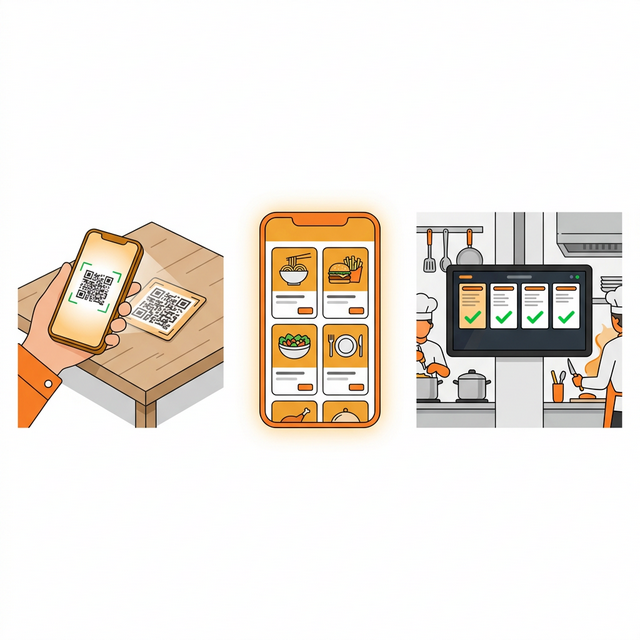
DashDine builds curbside in from the start. Guests pick curbside, add their vehicle, and order. The order lands on your Kitchen Display System (KDS) the moment it is placed, tagged to the car. In the Runner app your runner sees the bay, the colour, the model, and the plate, and walks straight to it. No paper, no shouting, no lap of the lot.
It is the same menu, the same kitchen screen, and the same flat monthly price as every other order type — curbside just finally works the way your guests expect.
See it live: open the demo menu · or explore guest ordering.